
The "Pre-Loved" Algorithm
How AI is Turning Brand Resale into a High-Margins Business
6/8/20263 min read
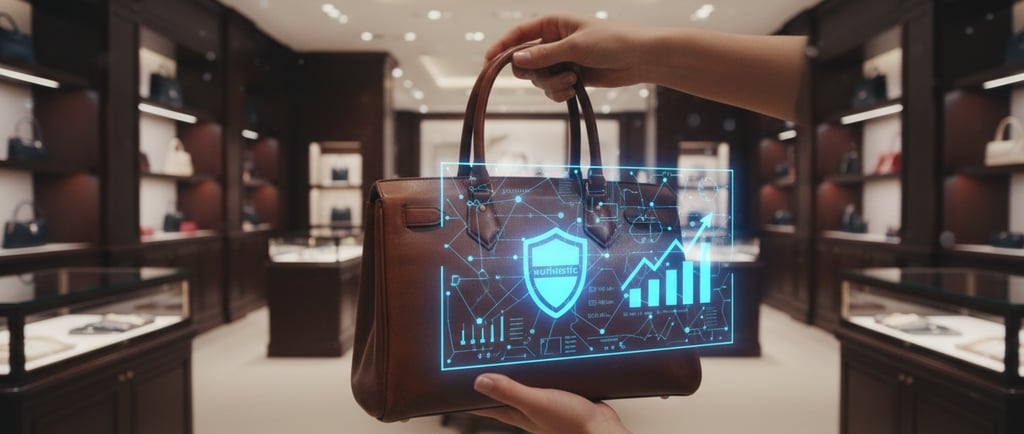

Resale was once the "unwanted child" of the luxury fashion world. For decades, high-end brands viewed the secondary market with a mix of suspicion and disdain, fearing that second-hand sales would dilute their brand prestige and cannibalize new product revenue. Buying "pre-loved" was a chaotic experience involving graining photos on eBay, the constant fear of counterfeits, and the manual drudgery of hunting through thrift stores.
But in 2026, the secondary market is no longer a threat; it is a profit engine.
Powered by the "Pre-Loved Algorithm," luxury houses are launching their own in-house resale platforms, using AI to solve the three biggest hurdles of the circular economy: authenticity, valuation, and inventory velocity. By taking control of their second-hand lifecycle, brands are not only meeting sustainability goals—they are unlocking a high-margin business model that builds lifelong customer loyalty.
As noted by McKinsey, the circular economy is one of the primary pillars of operational excellence in 2026. Vogue Business further emphasizes that AI-driven authentication is the "missing link" that finally makes brand-led resale scaleable and secure.
The AI Authenticator: Solving the Trust Gap
The greatest barrier to resale has always been the fear of the "Superfake." Some counterfeits are now so sophisticated that even seasoned human appraisers can be fooled by the stitching or the hardware.
AI is solving this through Micro-Texture Analysis. Using high-resolution smartphone cameras, AI models can now analyze the "DNA" of a garment or accessory:
Surface Geometry: Scanning the grain of leather or the weave of a fabric at a microscopic level that cannot be faked.
Hardware Spectrometry: Analyzing the metallic composition of zippers and clasps to ensure they match a brand’s specific metallurgical profile.
Archive Matching: Comparing a submitted item against the brand’s original digital production records to verify its origin.
This instant, AI-led verification allows brands to guarantee authenticity without the need for an army of human experts, making the resale process as safe as buying new.
Predictive Valuation: The "Kelly Blue Book" of Fashion
One of the hardest parts of resale is knowing what an item is actually worth today. In the past, sellers just guessed, and buyers looked for the lowest price.
Synthetic brands and legacy houses alike are now using Dynamic Valuation Algorithms. These models analyze real-time market data to set the perfect price based on:
Scarcity: How many units of this specific item are currently available globally?
Celebrity/Viral Signal: Has this piece recently been seen on a synthetic influencer or a major actress, driving up its "vibe" score?
Condition Grading: Using AI vision to automatically detect wear, tear, or discoloration from photos and adjusting the price accordingly.
This stabilizes the market, ensuring that sellers feel they are getting a fair price and buyers feel they are making a sound investment. As Forbes notes, the ability to view fashion as an "investable asset class" is a major driver of modern luxury consumption.
Resale as a Retention Tool
When a brand controls its own resale platform, it turns a one-time transaction into a Circular Relationship.
Imagine a customer buys a $3,000 handbag. Two years later, the brand’s AI styling agent notices the customer hasn't worn the bag in six months. The agent can proactively reach out: "This bag is currently trending in the resale market and is valued at $2,100. Would you like to list it on our official Pre-Loved platform for store credit toward our new collection?"
This creates several advantages:
Increased LTV (Lifetime Value): The customer is "locked in" to the brand’s ecosystem through store credit.
Lower Acquisition Costs: The "Pre-Loved" price point acts as a "gateway" for younger or more budget-conscious consumers to enter the luxury brand's world.
Data Sovereignty: The brand learns about the durability of its products and how they age, feeding that data back into the design process to improve future quality.
The Operational Win: From Liability to Asset
In the old model, returns and overstock were liabilities. In the AI-led resale model, they are Inventory Feedstock.
If an item is returned or doesn't sell at full price, it no longer needs to be sent to an outlet mall at a 70% discount. Instead, it can be seamlessly integrated into the "Pre-Loved" or "Archive" section of the brand's site. AI handles the merchandising, matching these "one-off" items to specific shoppers whose personal AI stylists have flagged them as a perfect match.
Closing the Loop: The End of "Disposable" Fashion
The rise of the "Pre-Loved Algorithm" is the final nail in the coffin for the "disposable" fashion mindset. When a consumer knows their purchase has a guaranteed, AI-tracked resale value, they are more willing to spend more on high-quality, durable garments.
Fashion is moving from a "consumption" industry to a "custodianship" industry. You don't just "buy" a coat; you act as its custodian until the algorithm helps you pass it on to its next owner.
The Bottom Line
AI is doing for fashion what it did for the stock market: creating a transparent, liquid, and high-speed exchange. By turning resale from a chaotic mess into a high-margin business, the "Pre-Loved Algorithm" is proving that sustainability isn't just about "doing good"—it’s about doing better business.
The brands that win in 2026 will be the ones that stop obsessing over the first sale and start obsessing over the fifth.
Luxury
Elevate your brand with our exclusive AI models.
Contact us
© 2026. All rights reserved.
(609) 901-8073