
The New 'Origin' Story
AI and Blockchain in Authenticating Human Craftsmanship
7/8/20264 min read
Understanding the Intersection of AI and Craftsmanship
The contemporary landscape of design and craftsmanship is being significantly transformed by the integration of Artificial Intelligence (AI) into the creative domain. Traditionally, craftsmanship has been celebrated for its uniqueness, attention to detail, and the personal touch that skilled artisans bring to their work. However, AI has entered this arena, generating designs that often rival those of human makers. This emerging synergy prompts critical discussions about authenticity, artistry, and the intrinsic value that consumers attribute to handmade versus machine-produced items.
AI tools, which include sophisticated algorithms and machine learning frameworks, are increasingly being employed in the design process. These technologies can analyze vast datasets to predict trends, fine-tune artistic styles, and even create new designs autonomously. Designers utilizing AI can simulate various outcomes, optimize functionality, and achieve results that are both innovative and efficient. Furthermore, this capability raises questions about the essence of creativity and whether AI-generated designs can truly embody the artisanal spirit of human craft.
Another critical element of this discussion is the distinction between mass-produced and handcrafted items. While mass-produced products ensure uniformity and accessibility, they often lack the emotional resonance and tactile character that define artisanal creations. Conversely, handcrafted items are imbued with individual artistry, reflecting the maker's personal journey and skill. As the marketplace for authenticity evolves, the challenge arises for consumers to discern between AI-generated designs that imitate craftsmanship and genuine handmade products. This is where the intersection of AI and craftsmanship takes on new significance, as both sectors must redefine their boundaries in the quest for authenticity in an age defined by technological advancement.
The Role of Specialized Sensors in Detecting Human Touch
In the contemporary landscape of craftsmanship, the integration of technology has transcended mere utility, evolving into tools that enhance the appreciation of human involvement. Specialized sensors designed to detect the nuances of human touch play a pivotal role in this evolution. These devices are engineered to capture a myriad of data associated with the making of artisanal products, enabling a deeper understanding of the craftsmanship involved.
Functionally, these sensors utilize a combination of advanced materials and intricate processing techniques to identify subtle variations in texture, pressure, and temperature during the creation process. For instance, piezoelectric sensors can detect force changes, allowing them to record variations in the artisan's grip. This information can be essential in recognizing the imperfections that are often present in hand-made products, thus highlighting the distinction between machine-made and human-crafted items.
The data collected by these sensors encompass multiple dimensions, including but not limited to the speed of movement during the crafting process, pressure applied at specific points, and heat generated through friction. Importantly, this information enables the identification of the unique signature of a craftsman, providing insights into their techniques and personal style. Such advancements underscore the significance of human involvement in the creation of products, as even minor discrepancies can reflect an artisan's individuality.
Overall, specialized sensors are revolutionizing the way we perceive craftsmanship by capturing the elements that make handmade items unique. They contribute to a more nuanced understanding of what it means to create, reinforcing the value of human touch in an increasingly automated world. By illuminating the subtleties that often go unnoticed, these technological innovations aid in preserving the integrity of traditional craftsmanship while embracing modern advancements.
Blockchain Technology as a Tool for Verification
Blockchain technology is increasingly recognized as a crucial instrument for verifying the authenticity of handcrafted items. At its core, blockchain operates as a decentralized ledger that records transactions across multiple computers in a way that allows for the secure and transparent verification of data. This transparency is particularly valuable in sectors where authenticity is paramount, such as the luxury goods market, where handcrafted items often carry significant sentimental and financial value.
One of the primary advantages of utilizing blockchain for verification is the ability to ensure the integrity of the supply chain. Each transaction involving a handcrafted item can be documented on the blockchain, effectively creating a comprehensive history from initial creation to final sale. This not only helps in tracing the origins of the piece but also confirms that the craftsmanship meets specific standards and comes from verified artisans.
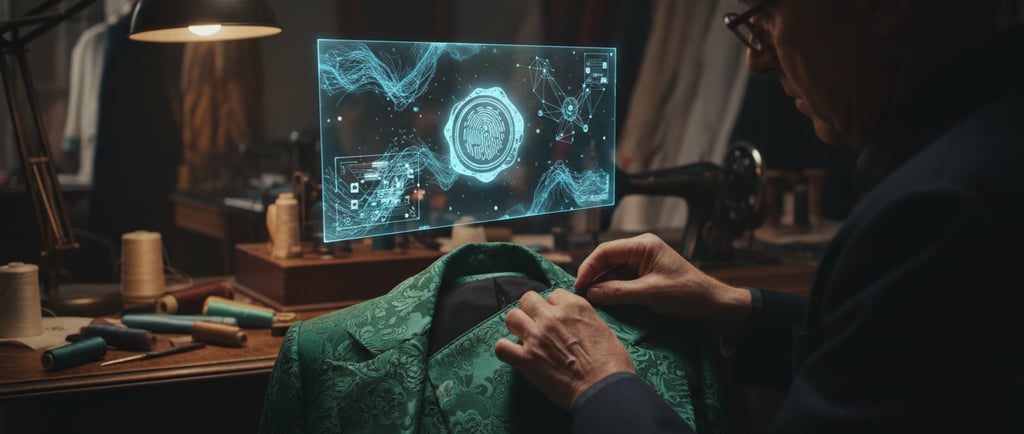
Furthermore, blockchain enables the secure storage of 'neural signatures' associated with each handcrafted item. These signatures are essentially unique identifiers that can link a particular piece to its creator, establishing an unbreakable connection between the artist and their work. This method of validation leads to improved consumer trust, as buyers can be assured that they are purchasing genuine products and not imitations. For brands, this capability enhances credibility, as companies that can demonstrate the authenticity of their offerings position themselves favorably within the luxury segment.
In addition to bolstering consumer confidence, the implications extend to protecting artisans and their intellectual property rights. With the documentation of each craft on the blockchain, artists are better equipped to safeguard their unique designs and concepts against imitation. Thus, blockchain technology serves not only as a tool for verification but also as a formidable ally in preserving the value of human craftsmanship in an increasingly digital marketplace.
The Future of Luxury Goods: Where Technology Meets Humanity
The luxury goods market is on the brink of a significant transformation as artificial intelligence (AI) and blockchain technologies evolve. These innovations not only hold the potential to redefine production processes but also challenge the very notion of craftsmanship and authenticity in luxury items. As consumers become increasingly informed and discerning, brands are tasked with leveraging these technologies to enhance their offerings while maintaining the human touch that defines luxury.
AI facilitates customization at an unprecedented scale, enabling brands to analyze consumer preferences and trends to create tailored products. This level of personalization elevates the luxury experience, transforming the way consumers engage with brands. By employing AI-driven analytics, companies can gain insights into customer behavior, allowing for the design of unique pieces that resonate with individual values and desires, thus reinforcing the connection between technology and humanity.
Blockchain technology further complements this shift by providing transparency and traceability—a feature that luxury consumers are increasingly seeking. By recording every stage of a product's journey, from sourcing raw materials to the final sale, blockchain reassures consumers of its authenticity. This helps mitigate counterfeiting and assures buyers that they are investing in genuine craftsmanship.
However, with these advancements come ethical considerations. The luxury sector must navigate the delicate balance between innovation and tradition. Companies need to ensure that the embrace of technological advancements does not diminish the artistry and skills that define their heritage. Furthermore, as we delve deeper into an era dominated by technology, consumers may begin to shift their perception of value in luxury goods, moving away from the exclusivity associated with craftsmanship towards a broader understanding of authenticity that incorporates technological verification.
Ultimately, as the luxury goods market evolves, brands that successfully blend the efficiency and innovation of technology with the intrinsic value of human craftsmanship will likely thrive in this new landscape.
Luxury
Elevate your brand with our exclusive AI models.
Contact us
THE SYNTHETIC FRONTIER
© 2026. All rights reserved.
(609) 901-8073