
The "Living" Garment
How AI-Designed Bio-Materials Are Growing the Future of Fashion
6/29/20263 min read
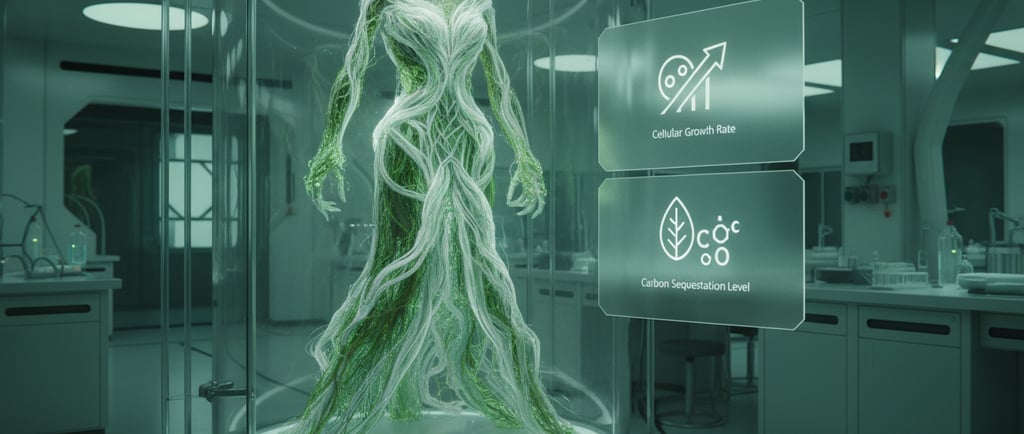
For centuries, fashion has been an industry of extraction. We shear sheep, harvest cotton, and pump petroleum to create synthetic polyesters. The materials were passive—dead fibers woven into static shapes. But in 2026, the lab has replaced the loom. We are entering the era of the Living Garment.
By merging Artificial Intelligence with synthetic biology, the fashion industry is no longer just "making" clothes; it is growing them. Using AI to simulate millions of protein sequences and cellular growth patterns, designers are creating bio-materials like mycelium leather, algae-based sequins, and spider-silk proteins that are stronger than steel and 100% biodegradable. This isn't just "sustainable" fashion—this is regenerative fashion, where the garment actually heals the planet as it grows.
As McKinsey reports, material innovation is the single biggest investment area for luxury conglomerates in 2026. Vogue Business observes that "bio-manufacturing" is finally reaching the scale needed to compete with traditional textiles, thanks to AI-optimized growth cycles.
AI as the "Molecular Architect"
Human designers are good at choosing fabrics, but they can't design the proteins inside the fabric. AI is the Molecular Architect that makes the living garment possible:
Protein Folding & Simulation: AI models like AlphaFold have paved the way for fashion-specific AIs that "design" new fibers. Want a fabric that breathes like linen but stretches like spandex? The AI iterates billions of molecular combinations to find the one that works.
Growth Optimization: Growing leather from mycelium (fungi) used to take weeks and was often inconsistent. AI-controlled incubators now monitor "Cellular Stress" in real-time, adjusting light, humidity, and nutrients to "print" a perfect leather jacket in a matter of days.
Self-Repairing Fabrics: Some of the most advanced bio-garments in 2026 are embedded with "living cells" that can repair small tears or neutralize odors using natural enzymes, significantly extending the garment's lifecycle.
The Economics of "Lab-to-Label"
The shift to bio-materials isn't just about saving the planet; it’s about Supply Chain Sovereignty.
Vertical Farming for Fashion: Instead of being dependent on global cotton prices or sheep-farming conditions in Australia, a brand like Noir Starr can "grow" its inventory in a localized bio-lab in the middle of London or New York.
Waste Elimination: Because the garment is grown in the final shape of the pattern (a process called "bio-casting"), there is zero off-cut waste. Traditional pattern cutting leaves up to 15% of fabric on the floor; bio-manufacturing leaves 0%.
Carbon Sequestration: Many algae-based textiles are "Carbon Negative," meaning they absorb more CO2 during their growth than is emitted during their assembly. In the era of the "Carbon-Neutral Closet," this makes them the most valuable assets in a brand’s portfolio.
The "Vibe" of the Living Garment
There is a unique aesthetic to AI-designed bio-materials. They don't look like cheap plastic or traditional wool. They have an iridescent, organic complexity that is impossible to replicate with traditional machines.
Algorithmic Textures: AI can design "growth patterns" that result in non-repeating, complex textures—making every single garment truly a one-of-a-kind organic original.
Reactive Colors: Some bio-materials are engineered with "structural color" (like a butterfly's wing), meaning they change hue based on the angle of light or the pH of the wearer's skin, without ever using toxic chemical dyes.
As Forbes notes, this "High-Tech Nature" aesthetic is the new signal of luxury in 2026.
The Ethical and Legal Frontier
The "Living Garment" brings new questions to the table:
Genetic IP: Who owns the patent on a specific AI-designed protein sequence? Can a brand "copyright" a specific species of lab-grown fungi?
"Life" Definition: Shermin Lakha of Lvlup Legal suggests we may eventually need regulations on "bio-synthetic" ethics. If a garment contains living, sensing cells, at what point does "care and cleaning" become a form of biological maintenance?
Biodegradability Standards: Consumers need proof that their "living" dress won't melt in the rain but will disappear in a compost bin in 3 months. AI is being used to provide "End-of-Life" certifications to ensure these claims are scientifically accurate.
The Bottom Line: Growing the Second Skin
The fashion industry is moving from "manufacturing" to "cultivation." The clothes of the future won't just sit on our bodies; they will be a Second Skin—breathable, reactive, and biologically compatible with the world around them.
In 2026, the most fashionable thing you can do is wear something that is alive. The loom is dead; long live the lab.
Luxury
Elevate your brand with our exclusive AI models.
Contact us
THE SYNTHETIC FRONTIER
© 2026. All rights reserved.
(609) 901-8073