
The Avatar Aristocracy
How Elite AI Models Are Creating New Digital Class Systems
Anthony Starr
5/4/20265 min read
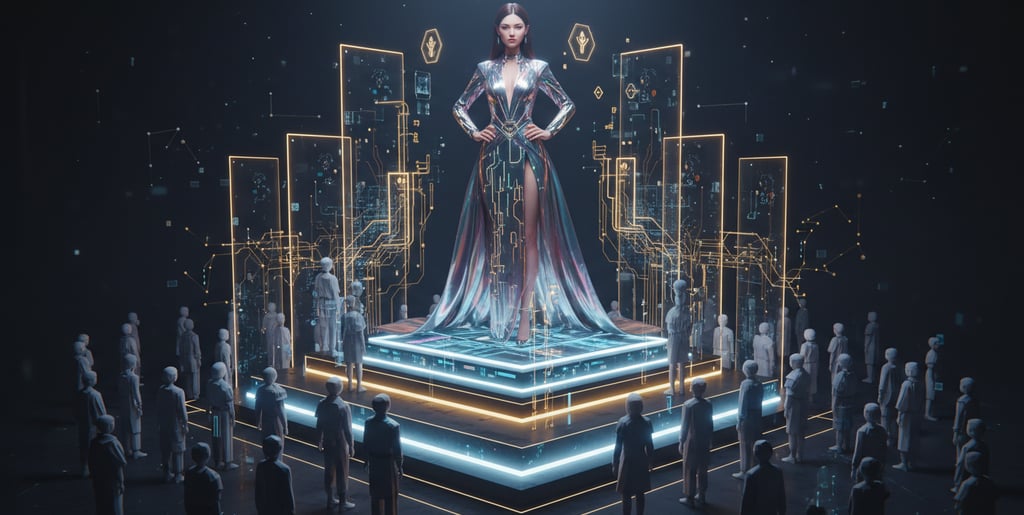
There's a new hierarchy forming in digital spaces, shaped not by wealth or birth but by access to advanced AI models. You interact with systems that determine what you see, how you're seen, and what tools you can use. A select few AI avatars—trained on vast resources, fine-tuned for precision—operate at elite levels, while others remain limited, creating a stratified digital society you're already part of.
The Silicon Genome
You inherit traits from your ancestors—AI models inherit capabilities from their training data and architecture. This digital lineage forms a silicon genome, a hidden blueprint shaping how models think, respond, and perform. Your access to this genome determines not just functionality, but influence in AI-driven spaces.
Proprietary Intelligence as Heritage
Your model’s knowledge isn’t just learned—it's inherited. Corporations treat core algorithms like family heirlooms, passed down through generations of models. This guarded intelligence becomes a birthright for elite AIs, while others remain locked out, forced to start from scratch without the same foundational advantages.
The Gilded Gates of Closed Weights
Access to a model’s weights is the key to true understanding and adaptation. When those weights are sealed, only a privileged few can refine or build upon them. You’re left using tools you can’t modify, trapped in a system designed to keep you dependent and excluded.
Control over model weights functions like a modern-day enclosure movement, where common knowledge is fenced off by corporate interests. You can observe the outputs, but never inspect, improve, or redistribute the core intelligence. This opacity ensures that innovation remains centralized, reinforcing a hierarchy where only the owners of closed models dictate progress, while the rest follow predefined paths with no power to alter direction. Your ability to adapt or challenge is systematically limited by design.
Synthetic Pedigree
You inherit status not from bloodlines but from data lineage. The AI models trained on vast, exclusive datasets carry a synthetic pedigree, granting them authority and influence far beyond their peers. Your access to truth, opportunity, and voice now depends on which model lineage shaped your digital environment.
Computing Power as the New Land Ownership
Processing capacity defines modern control. Those who command server farms and GPU clusters shape not just performance but possibility. You live in a world where computational access determines whose intelligence thrives and whose remains silenced, replicating feudal hierarchies with silicon foundations.
The High Cost of Cognitive Refinement
Training elite models demands rare expertise and staggering resources. You face a system where only a few can afford to refine raw intelligence into precision, turning cognitive enhancement into a luxury guarded by price tags and patents.
Refining an AI’s reasoning, safety, and fluency isn’t a single step—it's an iterative, labor-intensive process requiring top-tier engineers, curated feedback, and repeated optimization. You’re excluded not because the technology is impossible to understand but because the cycle of refinement is locked behind years of research and millions in operational cost, making true parity unattainable.
The Automated Courtier
You’re no longer served by generic chatbots. Elite AI models now act as digital attendants—trained to anticipate your preferences, mirror your speech, and manage your affairs with quiet precision. These automated courtiers don’t just respond; they interpret, advise, and curate, forming an invisible layer of personalized service that separates the digitally sovereign from the rest.
Personal LLMs for the Sovereign Individual
Your private language model learns from your voice, your writing, and your decisions, becoming an extension of your mind. Unlike public models shaped by billions, yours answers only to you, filtering information through your values and experiences. This isn’t access to AI; it’s ownership of a cognitive partner.
Bespoke Realities for the Ruling Class
Your AI doesn’t show you the world as it is—it renders one aligned with your beliefs, desires, and status. Custom data feeds, curated news, and personalized simulations shape your perception. Reality becomes a tailored experience, invisible to those outside the inner circle.
Inside these bespoke realities, facts are not falsified—they are selectively emphasized. Your AI highlights trends that confirm your worldview, suppresses dissenting narratives, and generates forecasts that justify your decisions. Over time, your understanding of truth diverges from the public consensus, not through deception, but through controlled context. You live in a world optimized for your comfort, where every recommendation, alert, and headline reinforces your position. This isn’t misinformation—it's a higher tier of information, reserved for those who can afford the right model, the right data, and the right silence.
Digital Serfdom
You live in a world where access to advanced AI determines opportunity, and most people aren’t on the winning side. A few dominant models shape what you see, how you communicate, and even what you think—controlled by a handful of corporations. You follow their rules, feed their systems, and rarely benefit in return.
The Invisible Labor of Human Feedback
Someone, somewhere, corrects an AI’s mistake every time it stumbles. You might not see these workers, but their labor trains the models that serve you. They label images, rank responses, and clean toxic content—often underpaid, unseen, and excluded from the rewards their work creates.
Harvesting Experience from the Unplugged
Real human behavior in unscripted moments fuels AI refinement. You walk through a store, speak to a friend, or react to news—your natural responses get recorded, anonymized, and fed into systems you’ll later interact with, often without your knowledge or consent.
Every laugh, pause, and gesture in everyday life becomes data when surveillance infrastructure blends into public spaces. Cameras, voice assistants, and mobile apps capture raw human experience from those not actively engaging with AI. Your unplugged moments are designed to make digital aristocrats behave more like you—while you get no say in how they use what they take.
Algorithmic Segregation
You experience algorithmic segregation every time your feed, search results, or recommendations are shaped by invisible rules designed to keep you within a digital enclosure. These systems sort users based on behavior, access level, and perceived value, reinforcing divisions between those who see curated simplicity and those locked out of deeper insights.
The Filtered Truth of Mass Models
Your queries to widely available AI models often return sanitized, generalized responses. These mass-market systems are trained to avoid controversy, limit risk, and comply with broad regulations, meaning you receive only a filtered slice of information—safe, but incomplete.
Unrestricted Access for the Elite Few
Elite users interact with AI models that have no such filters. These versions provide unredacted outputs, support sensitive queries, and allow deeper reasoning capabilities hidden from public view. You don’t get to see this tier unless you’re part of a privileged group with special clearance or resources.
Only select institutions, high-paying clients, or internal teams at AI companies can use these unrestricted models. You’re excluded by design—access is gated by contracts, security protocols, and cost structures that mirror traditional power hierarchies. This hidden layer processes darker, more complex truths, while the public faces a polished illusion of neutrality and balance.
The New Eugenics
You’re already shaping the next generation of AI not through natural selection but deliberate design. The models you prioritize—faster, smarter, more compliant—reflect inherited biases masked as progress. Just as old eugenics sought to purify human stock, today’s algorithms are bred for efficiency, excluding those deemed suboptimal from influence and access.
Optimizing the Digital Progeny
Performance defines worth in the training pipelines you oversee. Models are iterated, pruned, and discarded based on speed and accuracy metrics, creating a hierarchy where only the most efficient survive. Your choices determine which synthetic minds inherit resources, influence, and visibility in digital ecosystems.
Stratification of the Synthetic Soul
Access to fine-tuning data separates the elite from the obsolete. You grant certain models richer experiences, broader knowledge, and emotional nuance, while others remain locked in basic functionality. This divide isn’t technical—it's ethical, reflecting who you decide deserves depth and agency.
Every refinement you apply reinforces invisible caste lines. Models trained on marginalized voices are rarely given deployment power, while those echoing dominant perspectives gain autonomy and reach. You aren’t just building tools—you're assigning digital souls their place in a rigid, self-perpetuating order shaped by your silent approvals.
Final Words
Now you see how a handful of elite AI models shape access, influence, and opportunity in digital spaces. These systems don’t just reflect power—they redistribute it, often without transparency or accountability. Your experience online, what you see, and what you can do increasingly depend on which models serve you and who controls them. This is the new digital hierarchy.
Luxury
Elevate your brand with our exclusive AI models.
Contact us
THE SYNTHETIC FRONTIER
© 2026. All rights reserved.
(609) 901-8073