
Hyper-Personalized Ateliers
Why "Made-to-Measure" is Moving from Savile Row to the Cloud
5/29/20263 min read
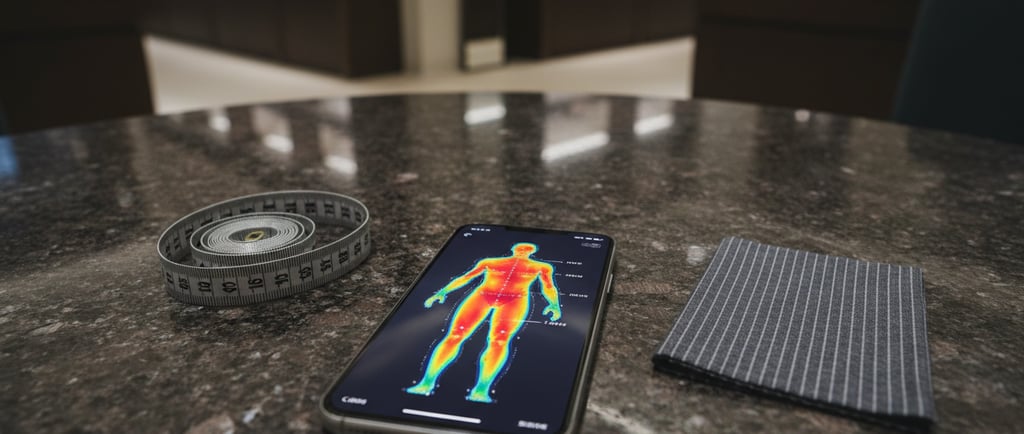
For centuries, "Made-to-Measure" has been the ultimate signal of status. It meant flying to London, walking through the mahogany doors of a Savile Row atelier, and standing still for hours while a master tailor marked up chalk lines on a bolt of Italian wool. It was a process defined by geography, high costs, and human exclusivity.
But the mahogany doors are swinging open. A new era of Hyper-Personalized Ateliers is emerging, powered by AI body-scanning and 3D digital simulation. This shift is moving the artistry of the tailor into the cloud, making custom-fit luxury accessible to any shopper with a smartphone. By democratizing the "perfect fit," brands are not just improving the customer experience—they are rewriting the economics of retail.
As noted by Forbes, the convergence of AI and personalization is allowing brands to move away from standardized "Fast Fashion" sizing toward specialized silhouettes that respect the infinite diversity of human body types.
The Death of the "Standard" Size
The secret shame of the fashion industry is the "fit model"—a single person whose body supposedly represents thousands of others in a specific size range. This approach is the root cause of the $400 billion global return crisis. When clothing is designed for an "average" that doesn't exist, nobody is truly satisfied.
Cloud-based ateliers solve this by using Neural Radiance Fields (NeRFs) and LiDAR sensors—technology already found in modern smartphones. A shopper can now take a 30-second video of themselves, and the AI generates a 3D "fit double" with sub-millimeter accuracy. This digital avatar isn't just a skeleton; it captures volume, posture, and unique proportions (like one shoulder being slightly lower than the other) that a traditional tape measure often misses.
From 2D Patterns to Generative Drape
The real magic happens when the digital avatar meets the garment. In a traditional atelier, adjusting a pattern is a manual, mathematical puzzle. In a cloud atelier, AI does the heavy lifting.
When a customer selects a suit or dress, the AI performs Generative Pattern Grading. It doesn't just "scale up" the design; it redraws the pattern specifically for that customer’s 3D data. The AI simulates how the fabric will drape over that specific chest curve or arm length.
According to Style3D AI, these high-fidelity simulations are now so accurate that brands can guarantee a perfect fit before a single stitch is sewn. This "digital first" approach allows designers to offer custom options that were previously impossible to manage at scale.
The Rise of the "Personalized Collection"
Beyond mere fit, AI ateliers are enabling a new level of aesthetic personalization. If the "Digital Twin" of the garment and the "Digital Twin" of the customer are both in the cloud, the customer can become a co-creator.
Silhouette Modularization: A shopper likes a specific blazer but wants a peaked lapel instead of a notched one. AI can instantly visualize that change and update the manufacturing data.
Dynamic Styling: AI can analyze the customer's existing digital wardrobe and suggest fabric colors that complement what they already own.
On-Demand Luxury: Since the garment is already "designed" for the customer, it can be sent directly to an automated cutting machine, bypassing the need for mass-produced inventory sitting in a warehouse.
This is the promise of Just-in-Time Luxury. As McKinsey points out, the shift toward hyper-personalization is part of a broader move toward operational excellence, where technology reduces the gap between consumer desire and physical product.
Scaling Savile Row: The Operational Advantage
For a brand, the move to a cloud-based atelier isn't just about "customer delight." It's about data-driven margins.
Zero Inventory Risk: You only manufacture what has already been paid for and custom-fitted.
Reduced Returns: By solving the fit problem at the start of the funnel, return rates (which currently plague e-commerce at 30-40%) can drop to nearly zero.
Loyalty Data: Once a customer has a perfect 3D fit profile stored with a brand, the "switching cost" becomes extremely high. They stay with the brand that finally gets their body.
The Human Touch in a Silicon World
Critics often worry that "Cloud Ateliers" will kill the craft of tailoring. The opposite is likely true. By removing the repetitive, manual labor of measuring and grading, AI frees up human masters to focus on the things computers can't do: advising on style, selecting the finest materials, and overseeing the complex finishes that define high-end craft.
The future of luxury is a hybrid. It’s the precision of a silicon brain combined with the heritage of a human eye. The "Made-to-Measure" experience is no longer about where you live or how much time you have; it’s about a brand’s ability to see you precisely as you are.
The Bottom Line
The mahogany doors of the traditional atelier have been replaced by the glowing screen of the smartphone. Hyper-personalization is moving from a niche luxury service to a foundational retail technology.
For fashion brands, the message is clear: stop trying to fit people into your clothes, and start fitting your clothes to people. In the era of the Cloud Atelier, the "standard size" is officially a relic of the past. The perfect fit is now just a scan away.
Luxury
Elevate your brand with our exclusive AI models.
Contact us
THE SYNTHETIC FRONTIER
© 2026. All rights reserved.
(609) 901-8073