Generative Streetwear
Why the Next Great Designer is a Discord Community with an LLM
6/10/20264 min read

https://cdn.abacus.ai/images/688661e7-32fb-4509-9dc9-1ca3f82bdbd2.png https://cdn.abacus.ai/images/b1d4d5ed-13de-4776-b602-46d5809bc081.png
Generative Streetwear: Why the Next Great Designer is a Discord Community with an LLM
For decades, fashion was a "top-down" dictatorship. Trends were dictated by a few hundred people in Paris, Milan, and New York. Designers were treated like gods, their singular vision handed down to the masses through luxury boutiques and glossy advertisements. Streetwear challenged this by bringing "the floor" to the runway, but even then, the power eventually consolidated into a few major founders and creative directors.
But in 2026, the "singular vision" is dying. We are entering the era of Generative Streetwear.
The next great "designer" isn't a person—it’s a collective of thousands of fans on Discord collaborating with a Large Language Model (LLM) and generative 3D tools. By moving from a "solo creator" model to a "community curation" model, fashion is becoming a decentralized, high-speed feedback loop where the line between the consumer and the creator has completely vanished.
As reported by Vogue Business, 2026 is the year of "maturation" for these community-led digital labels. They are no longer just making NFT hoodies; they are producing physical, high-end garments that are consistently out-selling traditional brands by being more culturally relevant. McKinsey describes this as the rise of "Hyper-Niche Communities" that use AI to bypass traditional gatekeepers.
The "Collective Prompt": Crowdsourcing Inspiration
In a generative streetwear brand, the season doesn't start with a mood board in a studio. it starts with a Community Prompt.
On a platform like Discord, thousands of members contribute to a shared vision:
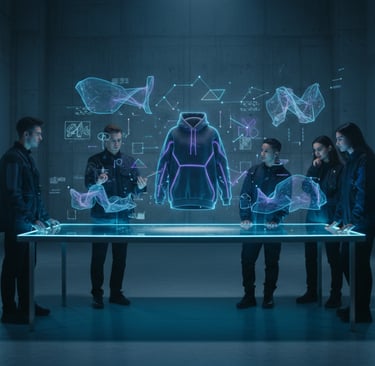
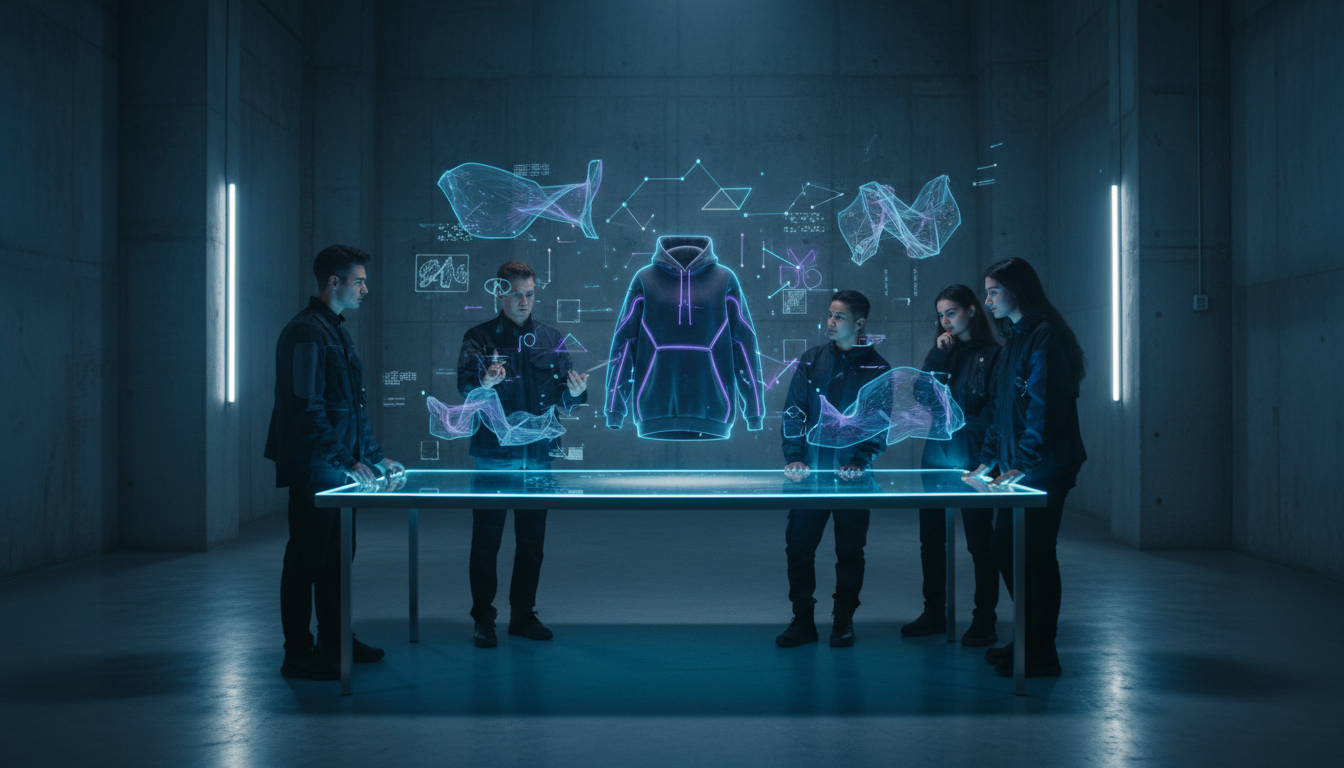
Phase 1: Input. Members feed the group LLM with cultural signals—music lyrics, archival architecture, underground gaming aesthetic, and real-time street photography.
Phase 2: Generation. The AI generates hundreds of "DNA" variations: silhouettes, hardware details, and unique fabric textures.
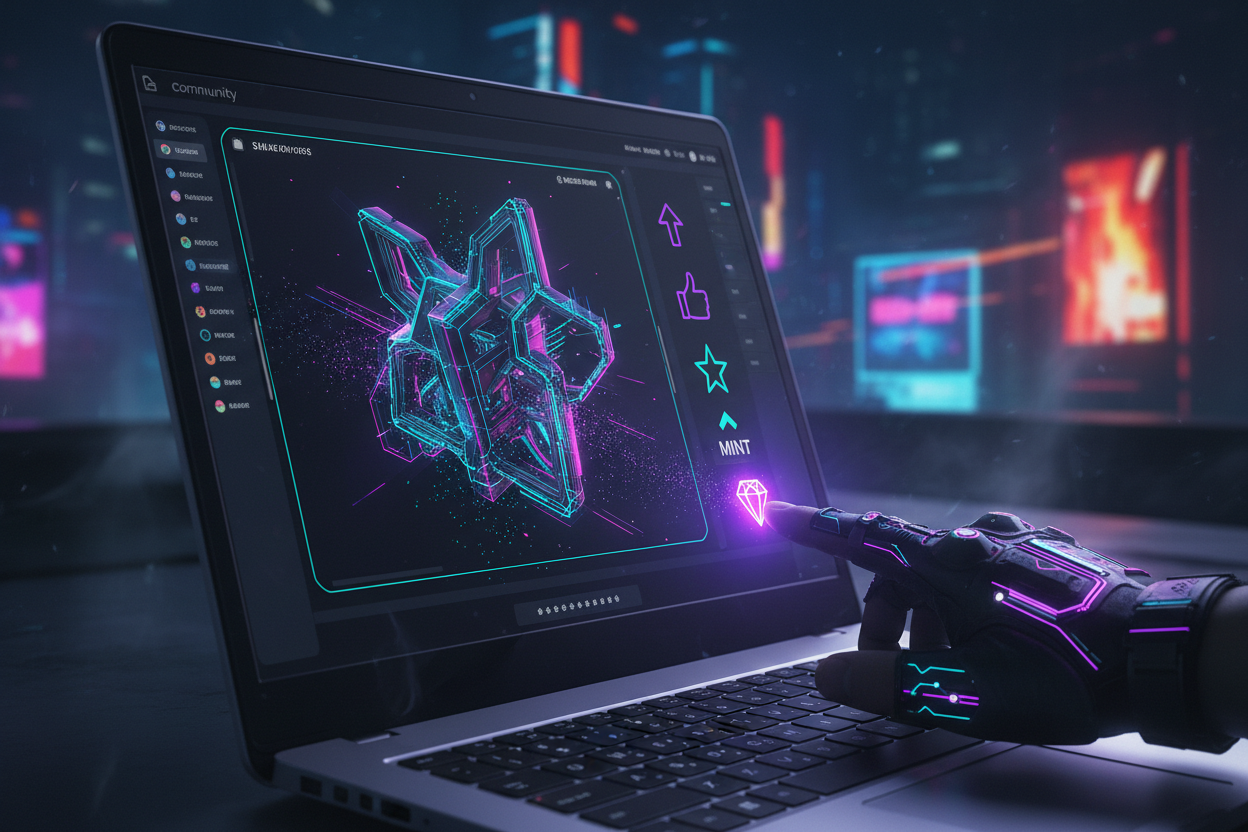
Phase 3: Curation. The community votes using "governance tokens" or simple up-votes. The designs that align with the community’s "vibe" are moved into the next stage.
This isn't just "design by committee" (which is usually boring). This is design by consensus, powered by the sheer breadth of an AI’s imagination.
From Discord to the Micro-Factory
The bottleneck for community design used to be manufacturing. How do you take a collective idea and make it physical?
Generative brands are leveraging the "Invisible Supply Chain" we discussed previously. Once a 3D digital pattern is finalized and voted on, it is automatically sent to a local micro-factory. These factories use AI-driven cutting and sewing robots to produce small, "on-demand" batches.
Micro-Drops: Instead of 10,000 units, the community might only order 150.
Exclusivity through Participation: Only those who participated in the design or voting process get "early access" to the physical drop.
Utility-First Design: Because the designers are the customers, the garments often include hyper-functional features that traditional brands miss, like specific pockets for new tech or materials that suit a specific sub-culture’s lifestyle.
Why "Community-Led" AI is Beating Big Luxury
Large luxury houses are struggling to keep up with generative streetwear because they are slowed down by "Veto Power." A creative director can say "no" based on a personal whim. A corporate board can say "no" based on a quarterly risk assessment.
Generative brands have no veto—they only have Data.
Speed-to-Culture: A generative brand can react to a viral moment in three days. A traditional brand takes three months to even have a meeting about it.
Radical Loyalty: When a customer helps design a sleeve or votes on a colorway, they aren't just a buyer; they are a stakeholder. This creates a level of brand "insularity" that influencers can't replicate.
The LLM as a "Brand Voice": The community trains their own local LLM to speak, act, and design in their specific sub-culture’s language. This AI becomes the brand’s "AI Designer," ensuring every output fits the collective’s aesthetic DNA.
The "Anti-Founder" Movement
We are seeing a rise in "Anti-Founder" sentiment. After years of founder-led scandals and "ego-driven" brand pivots, Gen Alpha and Gen Z are seeking Decentralized Authenticity. They trust a community of 50,000 like-minded people more than they trust a single celebrity or a creative director.
The "Brand as a Service" model allows these communities to exist without a traditional office or a CEO. The AI handles the logistics and design iteration, while the community provides the "cultural soul." According to Forbes, this shift is allowing "niche-at-scale" brands to thrive, capturing the fragmented attention of the modern digital consumer.
The ROI of the Community Loop
For the "creators" inside these Discord servers, the incentive is often more than just a cool hoodie. Many brands are implementing Creative Royalties:
If your specific prompt or modification leads to a best-selling garment, you earn a percentage of the sales (often in the form of brand credit or digital currency).
This turns the fan base into a workforce. The brand doesn't need to hire a design team; it has an army of thousands who are incentivized to make the brand successful.
The Bottom Line: The Power Shift
Fashion is no longer a lecture; it is a conversation. The "Designer" of the future is a facilitator—someone who sets the parameters for the AI and listens to the noise of the community.
Generative streetwear is proving that the most powerful thing in fashion isn't a famous name—it’s a shared prompt. The next great fashion empire won't be built in a Parisian atelier; it is being built right now, in a series of chat threads, by people who are tired of being told what to wear.
Luxury
Elevate your brand with our exclusive AI models.
Contact us
© 2026. All rights reserved.
(609) 901-8073