
From Silk to Silicon
How Digital Twins and Fiber-Accurate 3D Are Cutting Waste by 90%
5/27/20264 min read
From Silk to Silicon: How Digital Twins and Fiber-Accurate 3D Are Cutting Waste by 90%
The fashion industry has long been haunted by a "ghost" in the supply chain: the physical sample. For decades, the process of bringing a single garment to life involved a wasteful cycle of trial and error. A designer would sketch an idea, a factory would sew a prototype, and that prototype would be shipped halfway across the world for a fitting—only to be discarded because the drape was off or the zipper sat incorrectly. This cycle would repeat five, seven, or even ten times for a single SKU.
This is not just slow; it is a sustainability nightmare. However, we are currently witnessing a fundamental shift in Digital Craftsmanship. Through the integration of Artificial Intelligence and high-fidelity 3D simulation, the industry is moving from "guessing" to "simulating." By creating a "Digital Twin" of a garment—a virtual replica that behaves exactly like its physical counterpart—brands are slashing waste, saving millions in sampling costs, and accelerating their speed-to-market.
As reported by Style3D AI, over 48% of global fashion brands have now integrated machine learning models into their 3D design pipelines to support everything from collection planning to virtual fitting. This is no longer a futuristic experiment; it is the new standard of production.
The Physics of Fabric: Why "Pretty Images" Aren't Enough
In the early days of 3D fashion, digital clothes looked like "video game skins"—plastic-like textures that didn't move realistically. The breakthrough that defined 2025 and 2026 was the move toward fiber-accurate simulation.
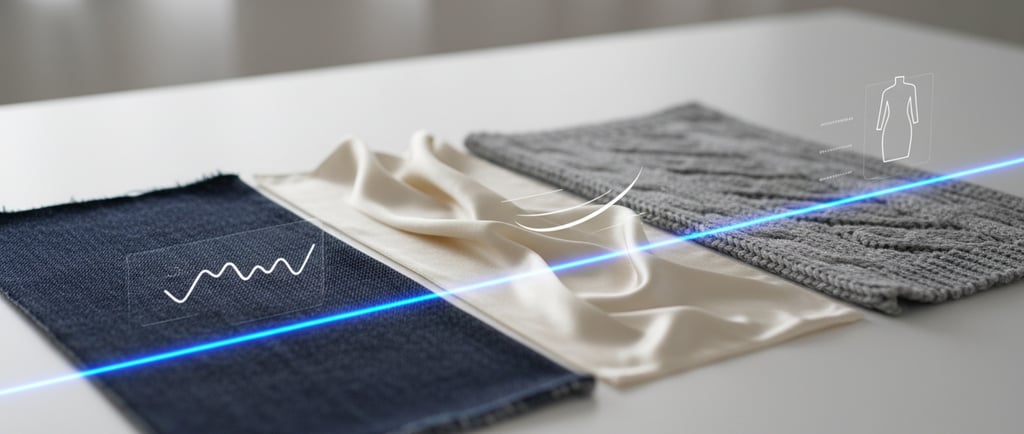
Modern AI-powered tools like Style3D and 3D3D don't just mimic the look of a fabric; they simulate its physics. When a designer "builds" a Digital Twin, the AI accounts for a massive library of material data points:
Draping and Weight: How a heavy wool vs. a light silk falls over a moving shoulder.
Micro-Elasticity: How much a denim weave will stretch at the knee or hips.
Moisture and Friction: How the fabric reacts to the environmental conditions of a virtual runway.
Instead of waiting weeks for a physical shipment, a designer can scan a piece of raw fabric and the AI instantly generates its digital twin. Rendering times have dropped from minutes to under 90 seconds, allowing for real-time iteration. Style3D – 2026 Breakthroughs
The 90% Sample Reduction: A Sustainability Revolution
The most immediate impact of Digital Twins is on the planet. Traditional sampling is a black hole of resources—water, energy, fabric scraps, and carbon-heavy shipping. By shifting to high-fidelity 3D samples, brands are seeing a "90% reduction" in physical waste.
Pre-Sell Before Production: Brands can now showcase hyper-realistic digital collections to wholesalers or even retail customers before a single yard of fabric is cut.
Eliminating "Hidden" Waste: When you can see a 3D fit on 50 different body types simultaneously, you catch fit issues early that would otherwise result in thousands of returns.
Zero-Waste Cutting: These AI tools generate digital patterns as a byproduct. When the 3D model is perfect, the 2D pattern is already optimized for the most efficient fabric layout, minimizing scraps during manufacturing.
This shift toward "Predictive Creativity" means retailers can move with the speed of data rather than the speed of ocean freight. According to latest industry insights, this has helped mid-sized apparel studios cut sampling costs by nearly 40% in a single season. Style3D AI — 2026 Trends
The New Master Tailor: Augmented Creativity
There is a misconception that AI replaces the designer’s "soul." In reality, it acts as a Creative Sparring Partner.
In the traditional world, a designer was limited by the time it took to physically prototype. In a 3D world, they can test forty different collar heights, pocket placements, and seam locations in a single afternoon. As noted by Forbes, AI helps designers leverage historical design archives to create new collections that are consistent with brand heritage but adapted to current trends.
The "Master Tailor" of 2026 isn't just someone with a needle; they are a digital artisan who understands digital drape and material physics. By removing the repetitive labor of manual pattern tweaking, AI allows designers to focus on high-value creative direction and brand storytelling.
Virtual Fitting: Closing the Loop with the Consumer
The final—and perhaps most lucrative—stage of Digital Twins is at the retail level. If a brand has a fiber-accurate digital twin of a jacket, they can offer Virtual Try-on (VTO) that actually works.
Current e-commerce conversion suffers from fit anxiety. Customers don't know how a brand’s "Medium" relates to their body. With high-fidelity 3D assets, a shopper can:
Overlay the Digital Twin on their own personal avatar.
See a "heat map" of where the fabric will be tight or loose.
View the garment in 360-degree high-fidelity motion.
This transparency reduces returns by up to 30%, keeping margins high and environmental impact low. Research indicates that consumers are increasingly seeking these "lasting investments" and ready-to-wear pieces that they can trust will fit before they hit the "buy" button. McKinsey — The State of Fashion 2026
The Road to 2027: Zero-Waste Real-Time Fashion
Looking forward, the convergence of AI, 3D simulation, and on-demand manufacturing is leading us toward a "Zero-Inventory" model. Collections may soon be launched as digital-only assets in virtual retail spaces. Only after a consumer places an order does the Digital Twin send its pattern data to a local, automated factory for production.
This "pull" model of fashion—where we only make what we love—is the only way the industry can meet its carbon goals while continuing to grow.
The Bottom Line
Digital Twins and AI-driven simulation are moving fashion away from being a "guesswork" industry of physical artifacts and toward a precise, data-driven craft. For brands, the decision to adopt 3D is no longer about being "tech-forward"; it is about being operationally viable.
The companies that master the Digital Twin today are the ones who will own the wardrobes of tomorrow. They are designing faster, wasting less, and meeting the consumer exactly where they are: in a world where silk and silicon have finally become one.
Luxury
Elevate your brand with our exclusive AI models.
Contact us
THE SYNTHETIC FRONTIER
© 2026. All rights reserved.
(609) 901-8073