
Digital Craftsmanship
The AI Revolution in 3D Fashion Design
5/20/20264 min read
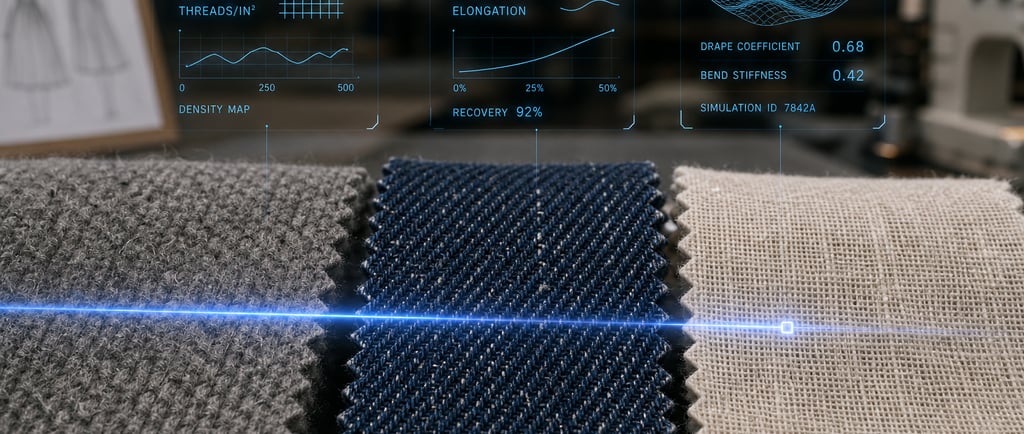
For decades, the fashion industry has been trapped in a cycle of physical waste. A designer sketches an idea, a factory produces a physical sample, it’s shipped across the world, reviewed, critiqued, and—more often than not—thrown away. This process is repeated 3, 5, or even 10 times for a single garment. It is slow, expensive, and environmentally devastating.
But we are entering a new era of Digital Craftsmanship.
Artificial intelligence is no longer just generating "cool images" of clothes; it is powering high-fidelity 3D simulation tools that allow designers to build, test, and sell garments before a single thread is cut. By merging advanced physics with machine learning, the industry is shifting toward a "digital-first" workflow that prioritizes precision and sustainability.
As reported by Style3D AI, 2026 has become a breakthrough year for digital garment simulation, with over 48% of global fashion brands now integrating machine learning into their 3D pipelines. This transition isn't just about speed—it's about a fundamental reassessment of how we define "quality" in a digital world.
From Visualization to Real-World Physics
In the early days of 3D fashion (circa 2020-2023), digital clothes often looked like "video game armor"—stiff, plastic-like, and unrealistic in how they moved.
The new generation of AI-powered tools, such as Style3D and 3D3D, has solved this by incorporating "fiber-accurate" material modeling. These platforms don't just mimic the look of silk or denim; they simulate the physics. They account for:
Drape and Weight: How the fabric falls over a moving shoulder.
Micro-Physics: How the weave of a linen shirt reacts to moisture or humidity.
Elasticity and Stress: Identifying where a garment is likely to tear or pull during daily wear.
This level of detail is possible because AI models are being trained on massive datasets of real-world fabric behavior. Designers can now "scan" a piece of cloth, and the AI instantly generates its "digital twin," including its exact texture, weight, and movement properties. According to recent reports, rendering times for these hyper-realistic layered outfits have dropped from several minutes to under 90 seconds. Style3D — 2026 Evolution
The 90% Sample Reduction
The most immediate impact of this technology is on the bottom line and the planet. Traditional sampling is a black hole of resources. By shifting to high-fidelity 3D samples, brands are reporting staggering efficiency gains:
Cost Savings: Some studios have reduced physical sampling costs by 90% by finalizing designs entirely in the digital space.
Time-to-Market: Lead times that used to span 18 months are being compressed into 3 months or less.
Zero-Waste Design: Manufacturers only produce what has already been "sold" or approved in a digital showroom, eliminating the "guesswork" of overproduction.
This is the promise of Predictive Creativity. When you can simulate how a garment looks on 1,000 different body types in seconds, you no longer need to produce "pre-production" runs to see if a silhouette works. You already know. Style3D — 2026 Trends
The Shift in Human Talent: The New "Master Tailor"
There is a common fear that AI will replace the designer. In reality, it is replacing the repetitive labor while elevating the craft.
In a digital-first workflow, the "Master Tailor" isn't just someone who can use a sewing machine; they are someone who understands digital drape, neural rendering, and material physics. AI acts as a "creative sparring partner," allowing designers to test 50 different pocket placements or collar heights in the time it used to take to draw one.
This "Augmented Creativity" allows fashion houses to focus on the artistry and brand heritage that AI cannot replicate. As Forbes notes, AI enables designers to leverage historical archives to create new collections that are perfectly aligned with brand DNA while meeting modern market expectations for speed and sustainability.
Marketing the Digital Twin
The "craftsmanship" doesn't stop at the design phase. These 3D assets are now fueling the next generation of e-commerce.
Instead of expensive, logistically complex photoshoots, brands are using their 3D digital twins to generate marketing assets. Because the 3D model is fiber-accurate, the resulting images are indistinguishable from real photography. This allows for:
Virtual Fitting Rooms: Consumers can "try on" the 3D asset on their own digital avatar, seeing exactly how the fabric pulls or drapes on their specific body.
Dynamic Content: Merchandising photos that change lighting or background instantly to match the shopper’s location or weather.
Pre-Order Economies: Customers buy a "digital-only" version of a garment, and the physical version is only manufactured once it hits a certain order threshold.
Closing the Loop: Digital to Physical
The final hurdle for 3D fashion has always been the translation back to the physical world. If a 3D garment looks great but is impossible to sew, the system fails.
Modern AI tools bridge this gap by generating digital patterns as a byproduct of the design. When a designer modifies a sleeve in 3D, the underlying 2D pattern updates in real-time, complete with seam allowances and grain lines. This ensures "industrial feasibility"—if it works in the simulation, it can be manufactured in the factory.
The Bottom Line
Digital Craftsmanship is more than just a technological upgrade; it is a cultural shift. It moves fashion away from being a "throwaway" industry of physical prototypes and toward an industry of precise, data-driven artistry.
For brands, the message is clear: the ability to design in 3D with AI is no longer a "future perk." It is the entry requirement for a sustainable, profitable, and fast-moving market. The designers who master these tools today aren't just using software—they are the new master tailors of the 21st century.
Luxury
Elevate your brand with our exclusive AI models.
Contact us
THE SYNTHETIC FRONTIER
© 2026. All rights reserved.
(609) 901-8073